For iPhone and Apple Watch
When did I last do that?
Some things aren't daily habits and aren't on a calendar. Call Mum. Water the plants. Service the boiler. Change the toothbrush head. You mean to do them now and then, and you find out you haven't when something reminds you the hard way.
ago is a list of those things and how long it has been. Mark one when you do it. That's all it asks.
Name the thing. Roughly how often, if you know — and skip it if you don't.
One tap when you do it, from the app, a widget, or your wrist.
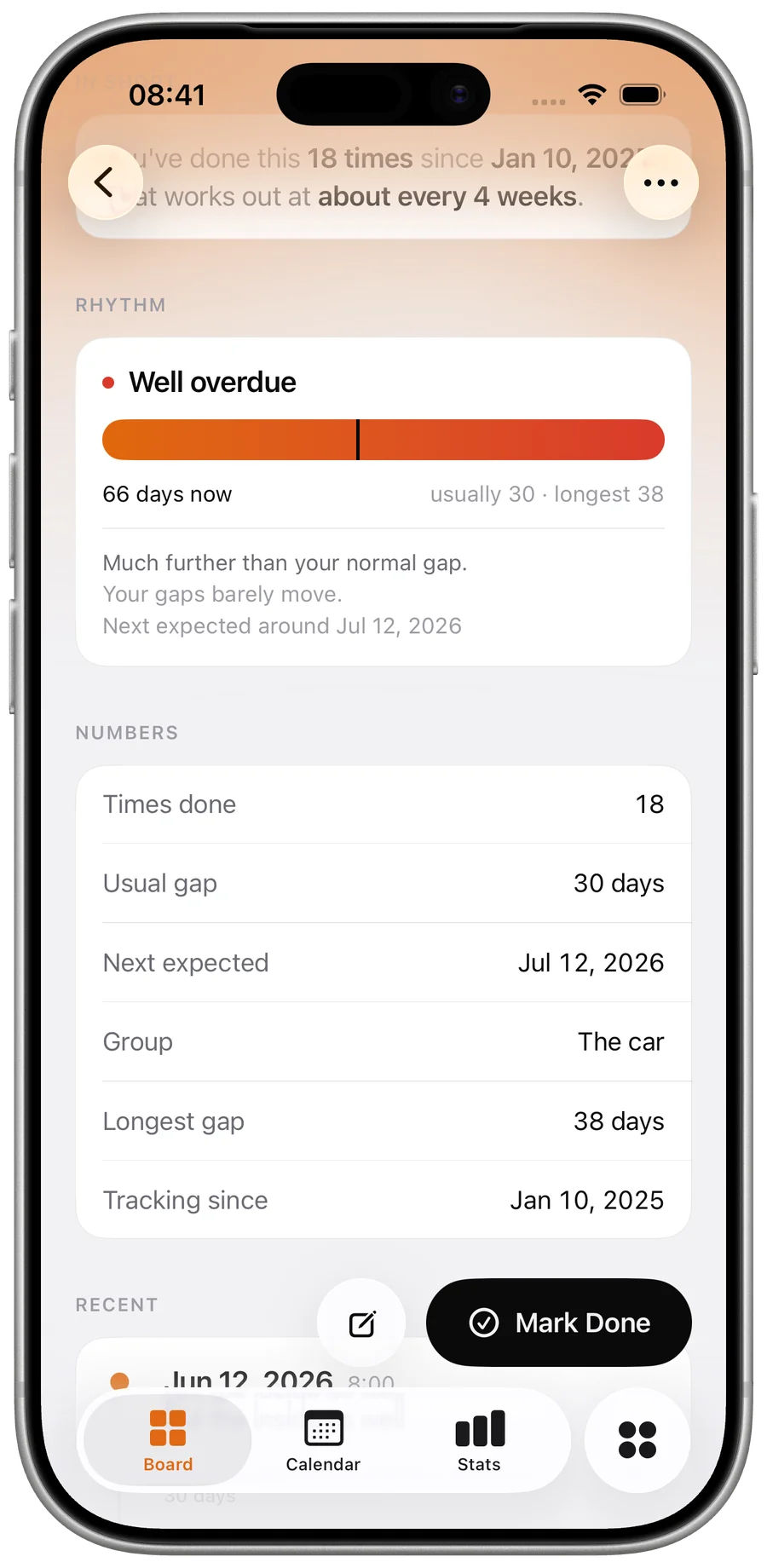
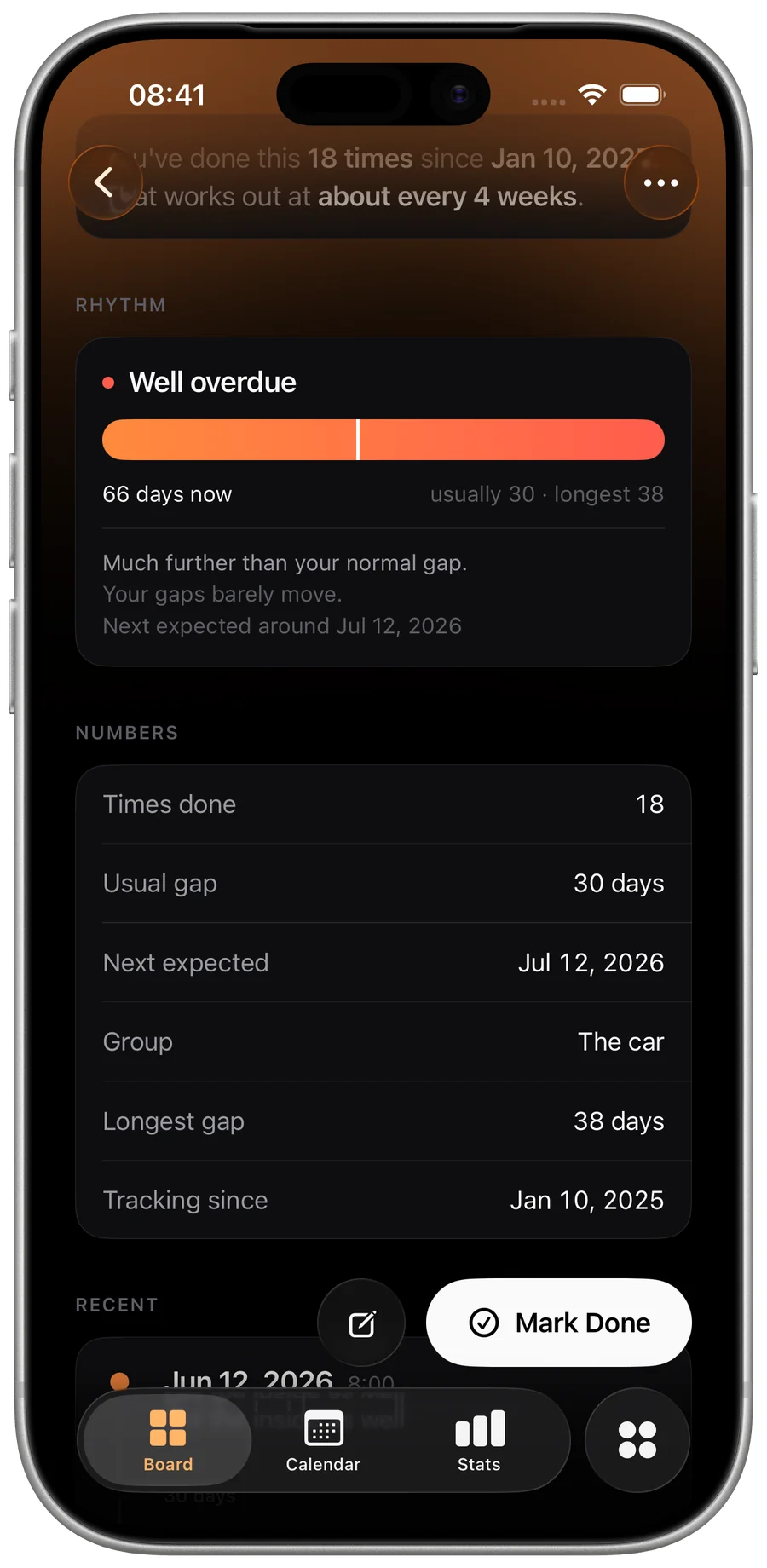
ago learns your rhythm from the gaps and says when one has stretched.
Why it isn't a habit tracker
No streaks. Nothing to break.
A streak counter turns a missed fortnight into a failure. But going five weeks between haircuts instead of four isn't a failure — it's information, and most of the time it's fine.
So ago doesn't score you. It learns what normal looks like for you from what you actually do, and the only thing it ever says is how long it has been and how long is usual. What you do with that is your business.
The idea
It learns the gap.
Every mark tells ago how long it had been. A few marks in, it has a median — your usual — and from then on it is watching for the one that stretches past it.
Features
It learns, then it tells you.
Your rhythm, not a schedule
After three marks, ago has enough gaps to take a median — and that median becomes the thing it measures against. Not a target you set once in an optimistic mood, but the interval you actually keep. Change how often you do something and the app changes with you.
A word when something drifts
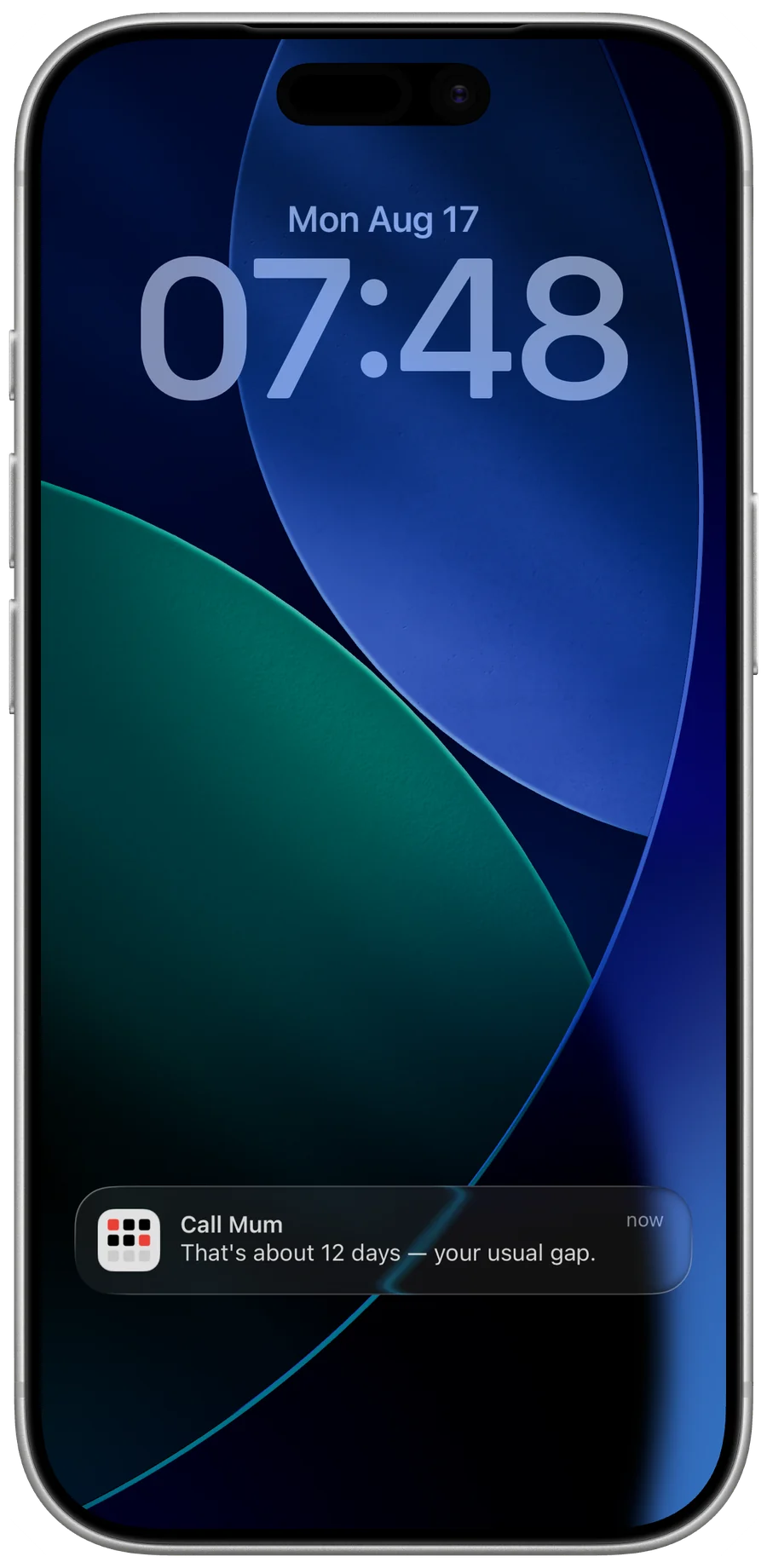
One notification, sent only when a thing has gone longer than its usual gap. Never a daily reminder, never a badge, never a red number. Off until you turn it on, and switchable per thing.
On your wrist
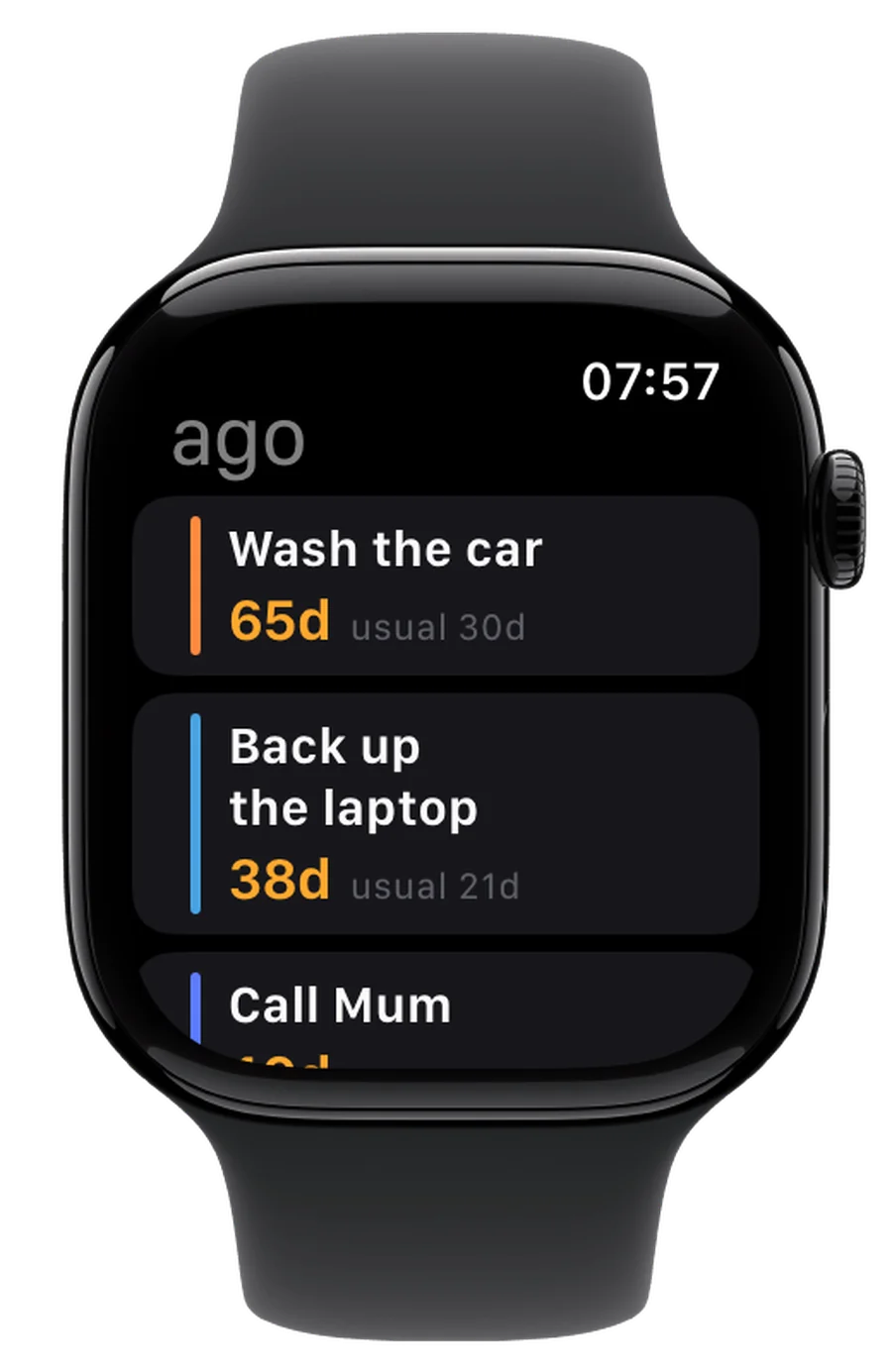
The whole watch app is a list and a button, because that is what a watch is for: you're standing in front of the plant you've just remembered to water. Mark it there and the phone has it a second later. A complication keeps the one you've left longest on your face all day.
Widgets that answer without being opened
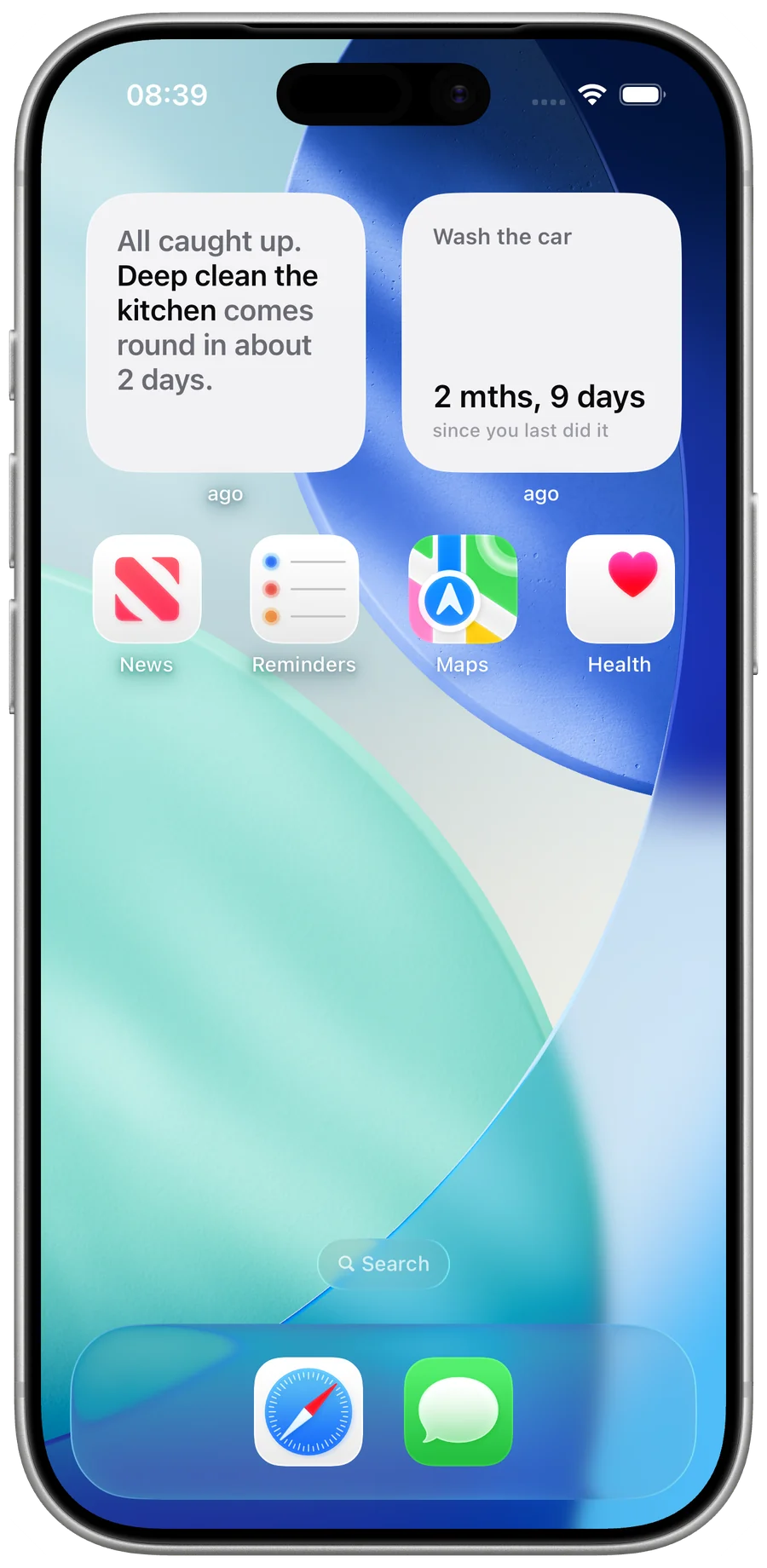
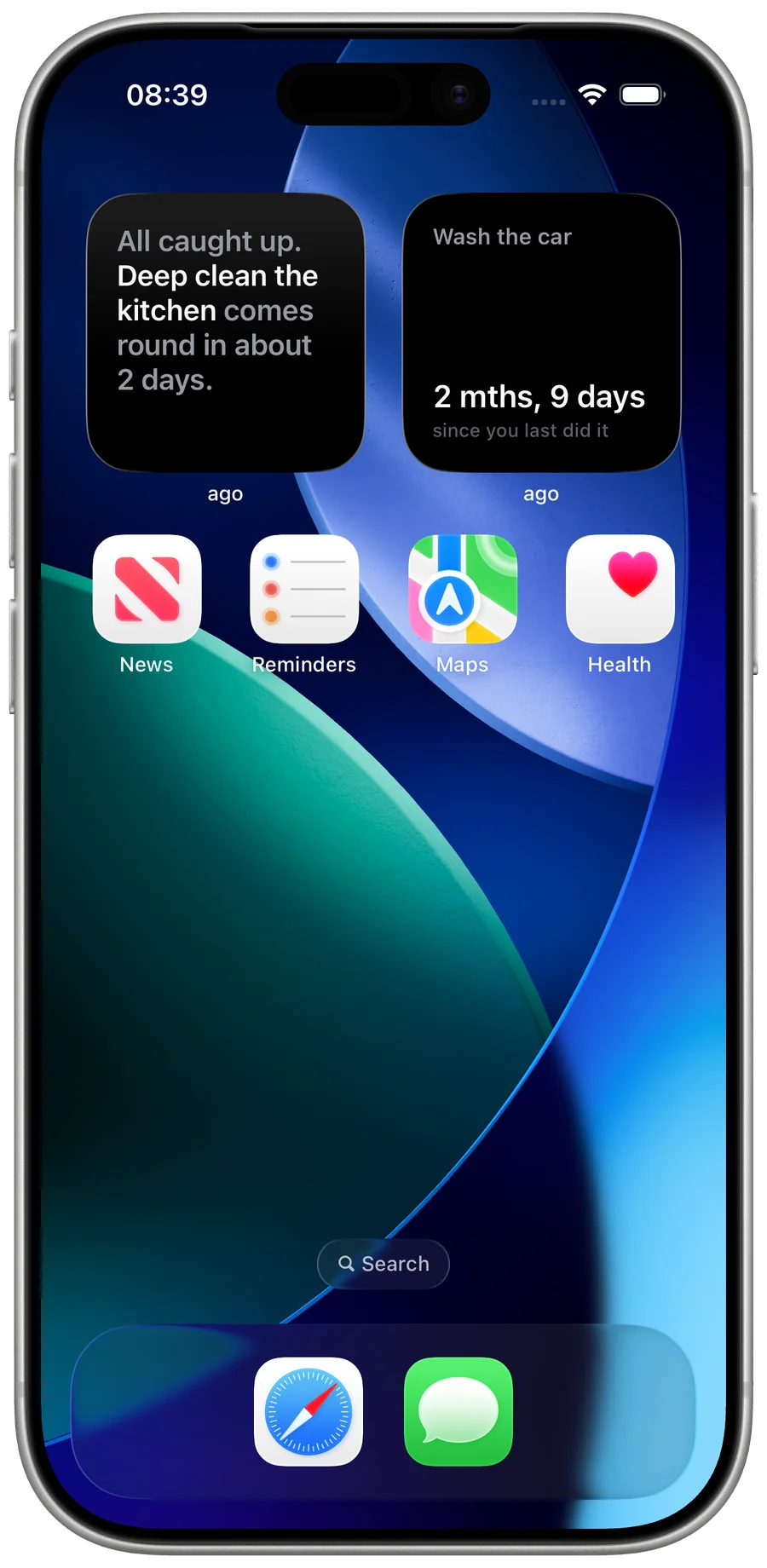
One thing you choose, or a whole group summed up in a sentence: Water the plants needs you — 12 days, against your usual 7. Home Screen and Lock Screen, in the app's own words rather than a dashboard of numbers.
Also inside
The rest of it.
Backdating
Did it on Tuesday and forgot? Mark it on Tuesday. Nothing is lost.
Notes on a mark
"Small filling, bottom left." The detail you'll want in a year.
Groups and search
Home, the car, people. Filter the board down to one part of your life.
iCloud sync
Your own private database. New phone, same history.
Archive
Take something off the board without throwing its history away.
Export
Everything you've tracked, out of the app, whenever you want it.
Pricing
Free for three things.
Not a trial that expires and not a crippled version — a free copy of ago tracks three things properly, forever, with widgets, notifications, sync and export included.
| What you get | Free | ago+ |
|---|---|---|
| Things you can track | 3 | Any number |
| One-tap marking, backdating, notes | ✓ | ✓ |
| Home and Lock Screen widgets | ✓ | ✓ |
| Apple Watch app and complication | ✓ | ✓ |
| A nudge when something drifts | ✓ | ✓ |
| iCloud sync, groups, archive, export | ✓ | ✓ |
| Calendar — what you've done and what's coming | — | ✓ |
| Statistics across everything you track | — | ✓ |
| Warning days before something slips | — | ✓ |
| Themes | 6 | All 47 |
| The app's own colour and icon | — | ✓ |
ago+ is a yearly subscription with a seven-day free trial, a weekly plan if you want it briefly, or a one-off lifetime purchase. Prices are shown in your own currency in the app.
Privacy
No account. No analytics. No servers of ours.
There is nothing to sign up for, nothing tracking you between apps, and no advertising. What you track lives on your device and syncs through your own iCloud account, which we have no way to read. We know nothing about you, and that is not a policy — it's that there is no mechanism.
FAQ
Questions people ask first.
How is this different from a to-do list or a habit tracker?
A to-do list is for things with a deadline. A habit tracker is for things you do every day. ago is for the middle — the things you do now and then, where nobody set a date and doing it a few days late is fine. No due dates, no streaks.
Do I have to say how often I want to do something?
No. You can, and it helps on day one, but ago works it out from what you actually do. After three marks it has a median gap to compare against, and from then on your own behaviour is the standard rather than an intention you typed in once.
Will it nag me?
Only when something has gone longer than usual for you, and never on a daily schedule. Notifications are off until you turn them on, they arrive at ten in the morning, and each one is a statement rather than an instruction. You can silence any single thing without silencing the rest.
What if I forget to mark something?
Backdate it. Nothing is lost and nothing breaks — there are no streaks to reset, because a streak would turn a missed fortnight into a failure rather than a fact.
Does it work without the internet?
Entirely. Everything is on your device; iCloud only carries a copy between your own devices when it can. The watch keeps working with your phone in another room and catches up later.
Is ago free?
Free for three things, with widgets, notifications, the watch app, sync and export all included. ago+ removes the limit and adds the calendar, statistics, advance warnings, every theme, and the app's own colour and icon.
How long has it been?
Add the three things you keep meaning to get round to, and find out.